
DOUBLE LIVES: Corned Beef & Cabbage

MAD T Food Blog
By Derrick Robinson
Corned beef and cabbage is one of those dishes that feels like it has always existed—like gravity, bad decisions, and that one coworker who microwaves fish. But its history is actually a chaotic little journey involving Irish farmers, British empires, and a surprising cameo by New York City.
Let’s start with the word “corned,” which has nothing to do with corn. Disappointing, I know. Instead, it refers to the large grains of salt—called “corns”—used to cure beef. So right away, this dish is already misleading us. It’s basically the culinary equivalent of naming a cat “Dog” and expecting everyone to keep up.
Back in Ireland, people weren’t actually sitting around eating corned beef and cabbage while playing fiddles and discussing the weather. Beef was expensive. Like, “maybe don’t eat the cow, we need it alive”. Instead, most Irish folks ate pork—specifically bacon—along with cabbage. That was the real classic combo: bacon and cabbage, humble, practical, and not trying to be the star of a St. Patrick’s Day menu.
Meanwhile, Ireland was exporting massive amounts of salted beef to England. Irony alert: the Irish were producing corned beef but not really eating it. It’s like baking cookies all day and then being told you can only smell them.
Fast forward to the 19th century, and a whole lot of Irish immigrants arrive in America, particularly in New York City. They settle into neighborhoods alongside Jewish immigrants, who—crucially—are very, very good at curing beef. Enter kosher butchers and their beautifully brined corned beef, which is both delicious and, importantly, more affordable than the pork the Irish were used to.
So the Irish immigrants pivot. They swap out bacon for corned beef, keep the cabbage (because cabbage is loyal and always shows up), and boom—corned beef and cabbage as we know it is born. Not in Ireland, but in America. It’s basically an immigrant remix, like the culinary version of Techo Ethal Merman.
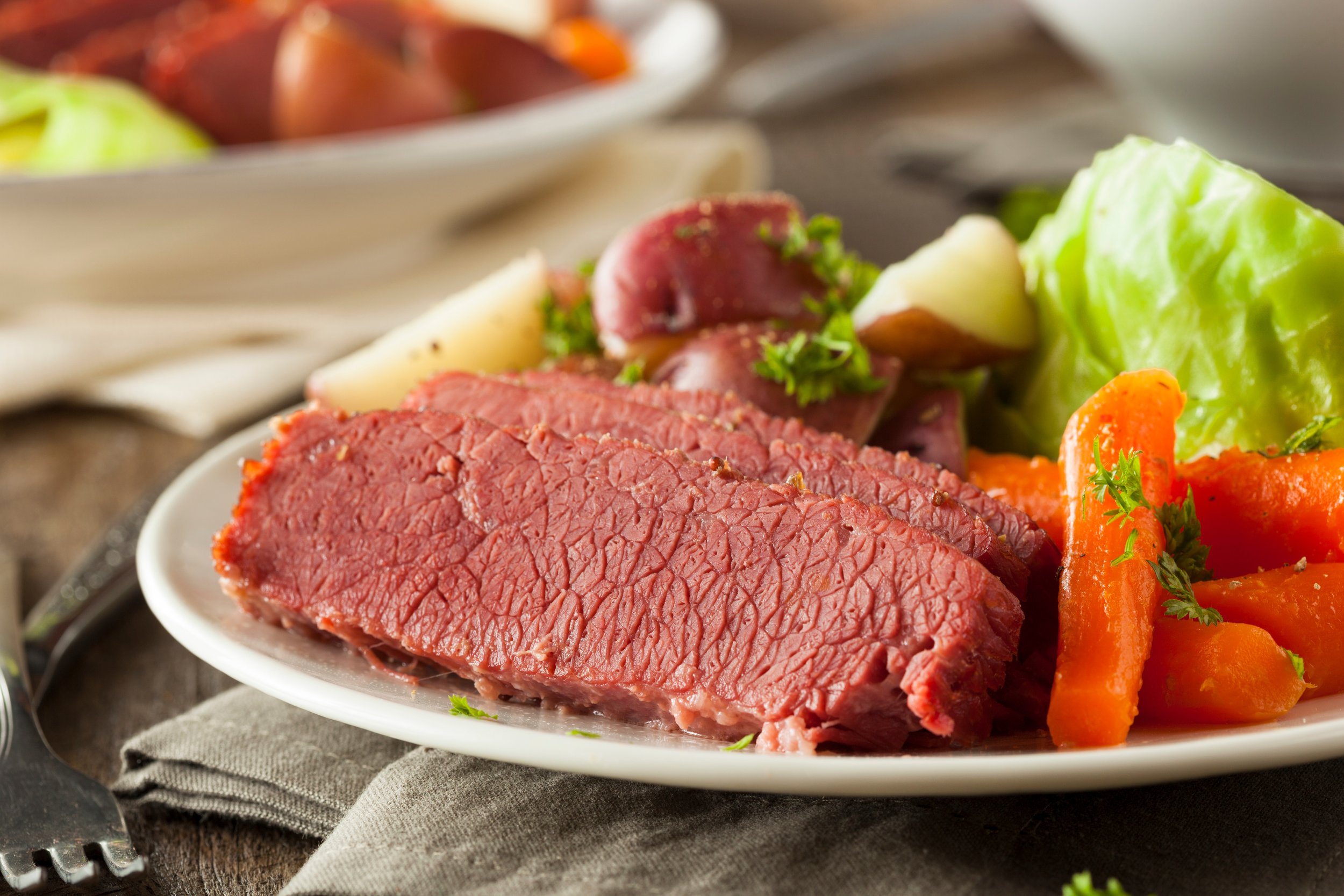
And then, of course, America does what America does best: turns it into a holiday centerpiece. St. Patrick’s Day rolls around, and suddenly everyone—Irish or not—is boiling meat and cabbage like they’ve been doing it for generations. Rivers are dyed green, people wear questionable hats,( i once played a game of show me your shamrock) and corned beef becomes a symbol of Irish identity, even though Ireland itself is sitting there like, “We mean… okay, sure.”
The dish itself is simple: a big hunk of brined beef, simmered until tender, served with cabbage, potatoes, and maybe some carrots if you’re feeling fancy. It’s hearty, salty, and unapologetically beige. This is not a dish that cares about aesthetics. It cares about feeding you, possibly for several days.
Today, corned beef and cabbage live a double life. On one hand, it’s a beloved St. Patrick’s Day tradition in the United States. On the other hand, it’s a slightly confused historical artifact—Irish by association, American by creation, and universally appreciated by anyone who enjoys food that doesn’t pretend to be light.
So the next time you dig into a plate of corned beef and cabbage, just remember: you’re not just eating dinner. You’re eating a story of migration, adaptation, and a very successful rebranding campaign by cabbage.